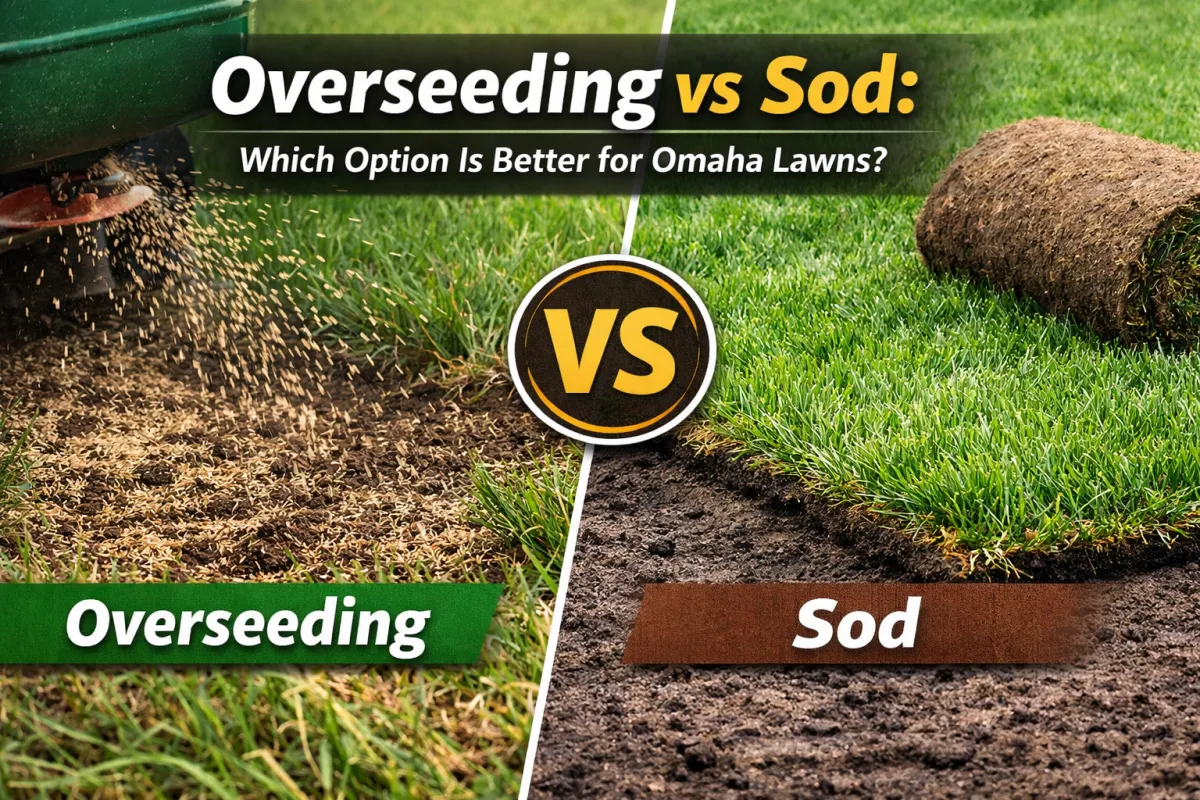
Overseeding vs Sod: Which Option Is Better for Omaha Lawns?
Keeping a lawn thick, green, and healthy in Omaha is not always easy. Hot summers, cold winters, foot traffic, drought stress, and thinning turf can all leave your yard looking tired. When that happens, homeowners usually face two popular solutions: overseeding or sod.
Both options can improve your lawn, but they work in very different ways. The right choice depends on your lawn’s condition, your budget, how quickly you want results, and the time of year. In Omaha, this decision matters even more because cool-season grasses such as Kentucky bluegrass and tall fescue perform best when planted in a specific fall window. Nebraska Extension recommends seeding cool-season lawns between August 15 and September 15, and notes that sod provides an “instant lawn” and can help during less-than-ideal seeding periods.
What Is Overseeding?
Overseeding means spreading new grass seed over an existing lawn without tearing out the old turf. It is commonly used to fill in thin spots, improve density, refresh color, and introduce stronger grass varieties into an older lawn.
For many Omaha homeowners, overseeding is the go-to solution when the lawn is still mostly alive but looks weak, patchy, or worn out. It helps thicken the yard naturally and can improve resistance to weeds and seasonal stress when done at the right time. Nebraska Extension notes that many lawns thinned by drought benefit from fall seeding because thicker turf is one of the best long-term defenses against weeds.
What Is Sod?
Sod is pre-grown grass that comes in rolls or slabs with an established root layer and soil attached. Instead of waiting for seed to germinate and fill in, you lay down mature turf for immediate coverage.
This makes sod a popular option for Omaha property owners who want quick visual results. It is often used for new homes, bare yards, severe lawn damage, erosion-prone areas, or situations where appearance matters right away.
Why Omaha Lawns Need a Local Approach
Omaha lawns are typically made up of cool-season grasses like Kentucky bluegrass and tall fescue. These grasses grow most actively in cooler parts of the year and often struggle during summer heat. That means timing is critical whether you choose overseeding or sod.
According to Nebraska Extension, the best time to seed cool-season lawns is mid-August to mid-September. They also note that delaying seeding can significantly slow maturity and establishment. This is one reason fall lawn work is so important in Omaha.
Overseeding vs Sod: Key Differences
1. Cost
Overseeding is usually the more affordable option. You mainly pay for seed, starter fertilizer, and possibly aeration or topdressing. This makes it attractive for homeowners who want to improve their lawn without a major upfront investment.
Sod is more expensive because you are paying for mature turf, harvesting, delivery, and installation. It can be worth the price when you need instant results, but it is usually the costlier route.
2. Speed of Results
If speed matters most, sod wins. Once installed properly, your yard looks finished almost immediately. That is a major benefit if you are preparing a property for sale, completing landscaping at a new home, or trying to fix a lawn fast.
Overseeding takes patience. Seed needs time to germinate, establish roots, and blend with the existing turf. You will not get an instant transformation, but you can get excellent long-term results with proper care.
3. Best Use Case
Overseeding is best for lawns that are thin, uneven, or aging but still have enough healthy grass to recover. It works well when the goal is renovation rather than replacement.
Sod is better for lawns with major bare areas, heavy damage, erosion, construction disturbance, or complete turf failure. If the lawn is beyond repair, sod can give you a fresh start faster.
4. Maintenance After Installation
Overseeded lawns need careful watering, limited foot traffic, and mowing adjustments while young seedlings establish. Good seed-to-soil contact is important, and aeration can help improve results when overseeding.
Sod also needs close attention after installation. Nebraska Extension says newly installed sod should be laid on moist, prepared soil and managed carefully during establishment to encourage rooting. So while sod looks easier because it is instant, it still needs disciplined aftercare.
Benefits of Overseeding for Omaha Lawns
Overseeding offers several advantages for homeowners who want to improve an existing lawn without starting over.
First, it is budget-friendly. Second, it helps fill in thin areas and creates a denser turf canopy. A thicker lawn naturally helps crowd out weeds and improve appearance. Third, overseeding gives you the chance to introduce better-performing grass blends that may handle Omaha weather more effectively.
It is also less disruptive than removing and replacing the entire yard. If your lawn still has a solid base, overseeding often makes more sense than a full renovation.
Benefits of Sod for Omaha Lawns
Sod is the better option when appearance and speed are top priorities. It provides immediate curb appeal, faster erosion control, and quicker visual uniformity.
It is especially useful after major landscape work, grading projects, new construction, or when an existing lawn is too damaged to recover with seed alone. Nebraska Extension notes that sod offers immediate visual appeal, quicker use of the lawn, and reduced soil tracking or erosion compared with seeding.
For homeowners who do not want to wait for germination and fill-in, sod can be the most practical solution.
When Overseeding Is the Better Choice
Overseeding is usually the better option when:
Your lawn is thin but not dead.
You want a more affordable lawn improvement method.
You are trying to improve turf density in the fall.
You want to strengthen your lawn gradually over time.
You are dealing with minor patchiness, not total lawn failure.
In Omaha, early fall is ideal for this kind of work because cool-season grasses establish best then. Nebraska Extension also recommends patience in spring and points to late April into early May for fertilization rather than rushing lawn work too early.
When Sod Is the Better Choice
Sod is usually the better choice when:
Large sections of your yard are bare.
The lawn has severe weed invasion or disease damage.
You need fast results.
You are installing a brand-new lawn.
You want immediate green coverage for a home sale or landscaping project.
If the existing turf is beyond recovery, overseeding may not be enough. In that case, sod can save time and create a much more uniform finished lawn.
Best Time for Overseeding or Sod in Omaha
For Omaha lawns with cool-season grass, fall is generally the best season for overseeding. Nebraska Extension specifically recommends August 15 through September 15 for seeding Kentucky bluegrass and tall fescue.
Sod offers more flexibility, but proper timing still matters. Even with sod, cooler temperatures and active root growth help establishment. Nebraska Extension explains that sodding can be used when timing is less than ideal for seeding, but good establishment practices are still necessary.
Which Option Lasts Longer?
Both overseeding and sod can produce long-lasting results if installed and maintained properly. The real difference is not which one lasts longer by default, but whether the lawn gets the right preparation, watering, mowing, and follow-up care.
Overseeding can create a strong and healthy lawn over time if the existing turf is salvageable. Sod can also thrive for years, but only if it roots deeply into the soil below and is not treated like a finished lawn too soon.
The Final Verdict: Overseeding or Sod for Omaha Lawns?
For most Omaha homeowners, overseeding is the better option when the lawn is thinning but still has life. It is more cost-effective, supports long-term lawn health, and works well with the cool-season grasses common in eastern Nebraska.
However, sod is the better choice when the lawn has major damage, large bare areas, or you want immediate results. It costs more, but it gives you an instant lawn and a faster visual transformation.
The best choice comes down to your lawn’s current condition. If you need improvement, overseeding is often enough. If you need a reset, sod may be worth the investment.
Need Help Choosing the Best Solution for Your Omaha Lawn?
Every lawn is different. Some need a simple overseeding plan, while others need full sod installation to recover properly. A professional lawn assessment can help you decide which option fits your yard, budget, and goals.
Whether you want to thicken patchy turf or install a fresh new lawn, choosing the right method at the right time can make all the difference for a healthy, attractive Omaha yard.
